Durability and maintenance
Quartz is engineered from crushed stone and resin, which makes it non-porous — it never needs sealing. Granite is a natural stone and is porous, so it needs periodic sealing, typically around once a year, to stay stain-resistant.
Look and feel
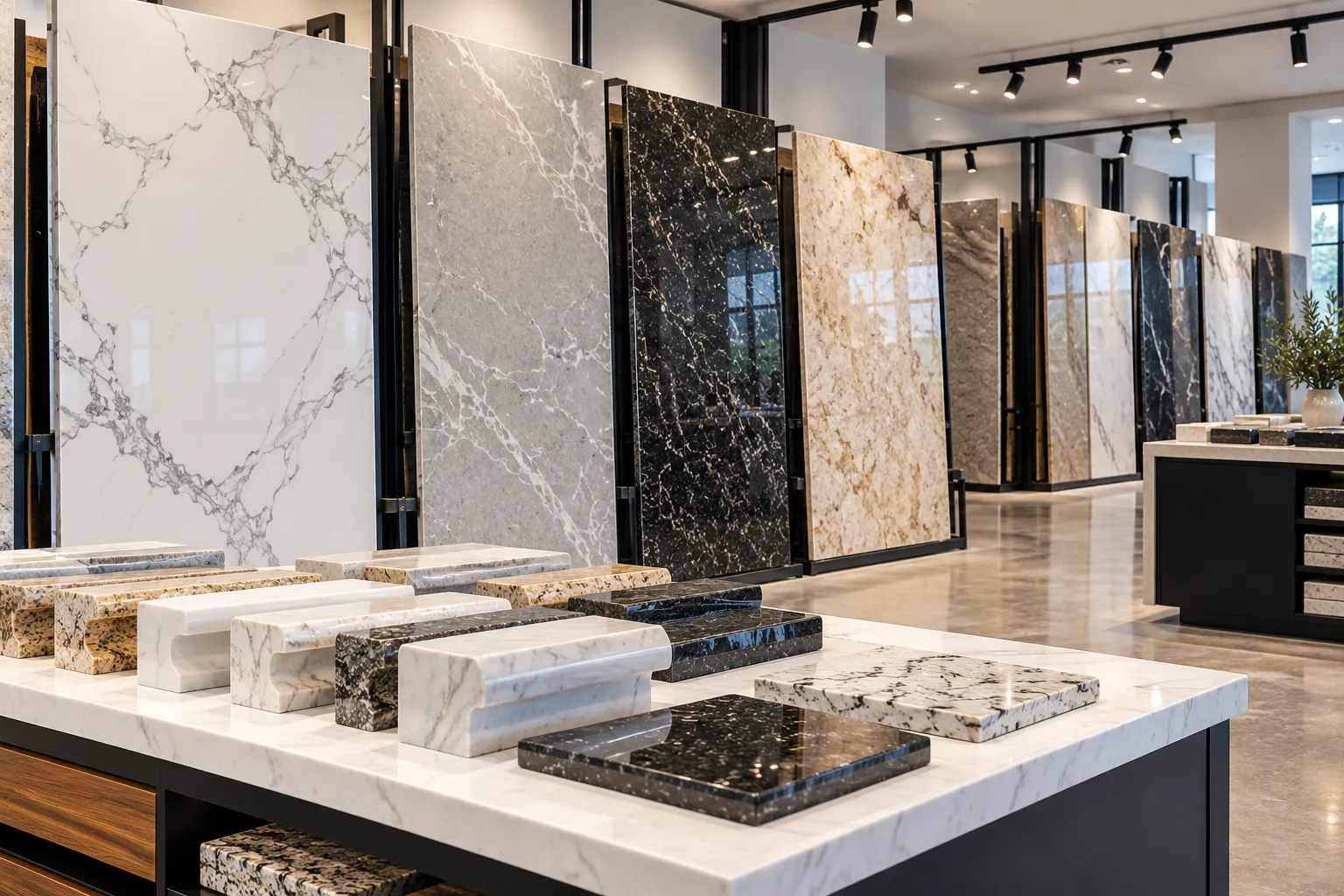
Granite is cut from natural slabs, so no two pieces are identical — if a one-of-a-kind natural pattern matters to you, that's granite's biggest advantage. Quartz is manufactured, so its pattern repeats consistently across a kitchen and comes in a much wider range of colors, including looks that mimic marble.
Heat and scratch resistance
Granite handles direct heat from a hot pan better than quartz, whose resin content can discolor or scorch under sustained heat. Both resist scratching well under normal use, but neither is scratch-proof, and a cutting board is cheap insurance either way.
Price
- Pricing for both varies widely by slab, color, fabrication and edge profile — comparing the two in the abstract is less useful than comparing the actual slabs you like side by side.
- Exotic or rare granite slabs can run well above typical quartz pricing, while popular quartz colors can run above entry-level granite — it depends more on the specific slab than the material itself.
If low maintenance and color consistency matter most, lean quartz. If a unique, all-natural look matters more than a yearly sealing chore, lean granite. Bring your cabinet and flooring samples into our Bloomfield showroom and we'll show you both side by side under your own finishes.